A stone house, a garden, the river.
Eight years, one breed, and a rule that has never changed: never more puppies than we can know by name.
It all started with a dog that wasn't ours.
Isabelle's father hunted waterfowl on the Kamouraska mudflats, like many families around here. A friend of his had a Toller — a small copper-coated dog that played at the water's edge to lure ducks, then retrieved, again and again, never seeming to tire. Isabelle was twelve, and she never forgot that dog.
It took almost twenty years, a stone house inherited from her grandmother in Kamouraska, and one long conversation with Denis on a November evening for the idea to become a project. Our first female, Marguerite, arrived the following year — not to breed right away, simply because Isabelle finally wanted that dog.
The name "Marée Douce" (gentle tide) came to us naturally: in Kamouraska, the tide goes out far and slowly over the flats, never rushing anyone. That's exactly the pace we wanted for our kennel.
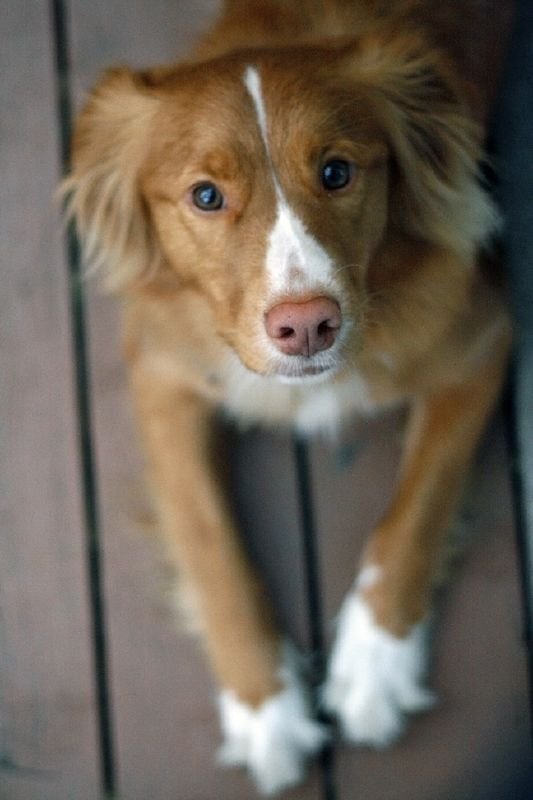
The Nova Scotia Duck Tolling Retriever, and nothing else.
The smallest of the retrievers, and likely the liveliest. You won't mistake it for a golden once you've seen it play.
Tolling: playing to lure
Developed in the 19th century in Little River, Nova Scotia, the Toller owes its name to a unique hunting technique: it plays and bounds along the shore in sight of ducks offshore, sparking their curiosity and luring them within gun range. The hunter then calls the dog back to retrieve the downed bird from the water. As much a performer's job as a retriever's.
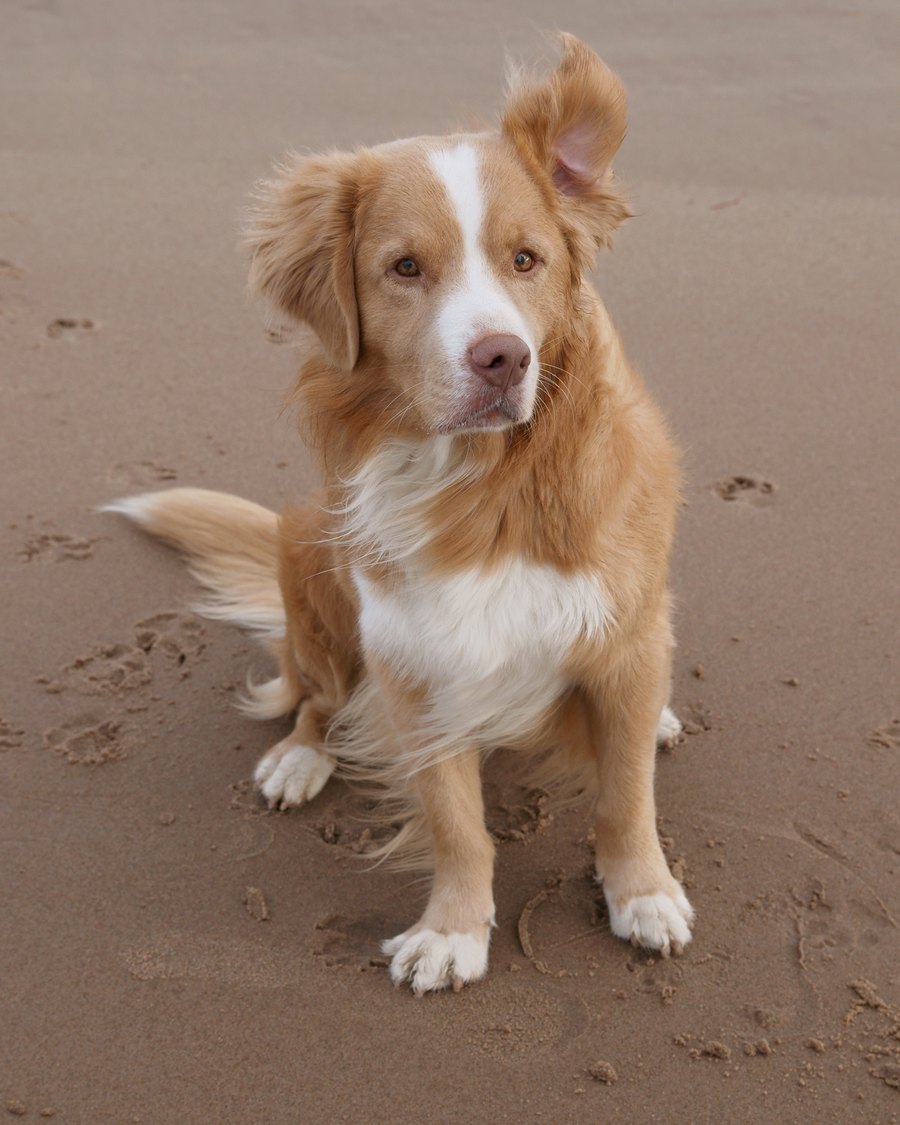
A red-to-mahogany coat with classic white markings on the chest, feet and tail tip: every puppy carries a bit of that history, even the one who will never see a duck.
A temperament all its own
Sharp, intelligent, highly motivated by food and play — so easy to train for anyone who takes it seriously. More reserved than a golden with strangers, it bonds deeply with its family. And it "screams": the famous Toller scream, a high-pitched vocalization of excitement that startles you the first time and grows endearing over time.
This is not a dog for a sedentary lifestyle. Without exercise or stimulation, a Toller gets bored — and a bored Toller invents its own games, rarely to your taste.
Worth knowing before you write: the Toller suits active families, outdoor and water enthusiasts, and people ready to invest time in training. It's probably not the right choice for a first dog with no experience, nor for a household looking for a quiet companion.
What we screen for, and what we guarantee.
No breeding takes place before both parents have completed the screenings recommended for the breed. Certificates are handed to you directly — never summarized, never "available on request."
Hips and elbows
X-rays evaluated by a recognized body, on both parents, before breeding.
Heart and eyes
Cardiac exam and annual ophthalmologic exam by a veterinary specialist.
Genetic panel
DNA testing, including the autoimmune conditions somewhat more common in the Toller, to avoid pairing two carriers.
Two-year guarantee against serious hereditary illness, provided in writing. Replacement or refund, your choice — and the dog always comes back here if they can no longer stay with their family.
Come for tea before you decide.
We welcome families by appointment, even without a firm plan. You'll see where the puppies are born, meet the parents, and ask the hard questions out on the porch.
One piece of advice, even if you don't adopt from us: be wary of a breeder who suggests meeting in a parking lot, or who won't let you see the mother. It's the most reliable warning sign there is.